When Nature Becomes the Instrument: Sampling Music from the Living World
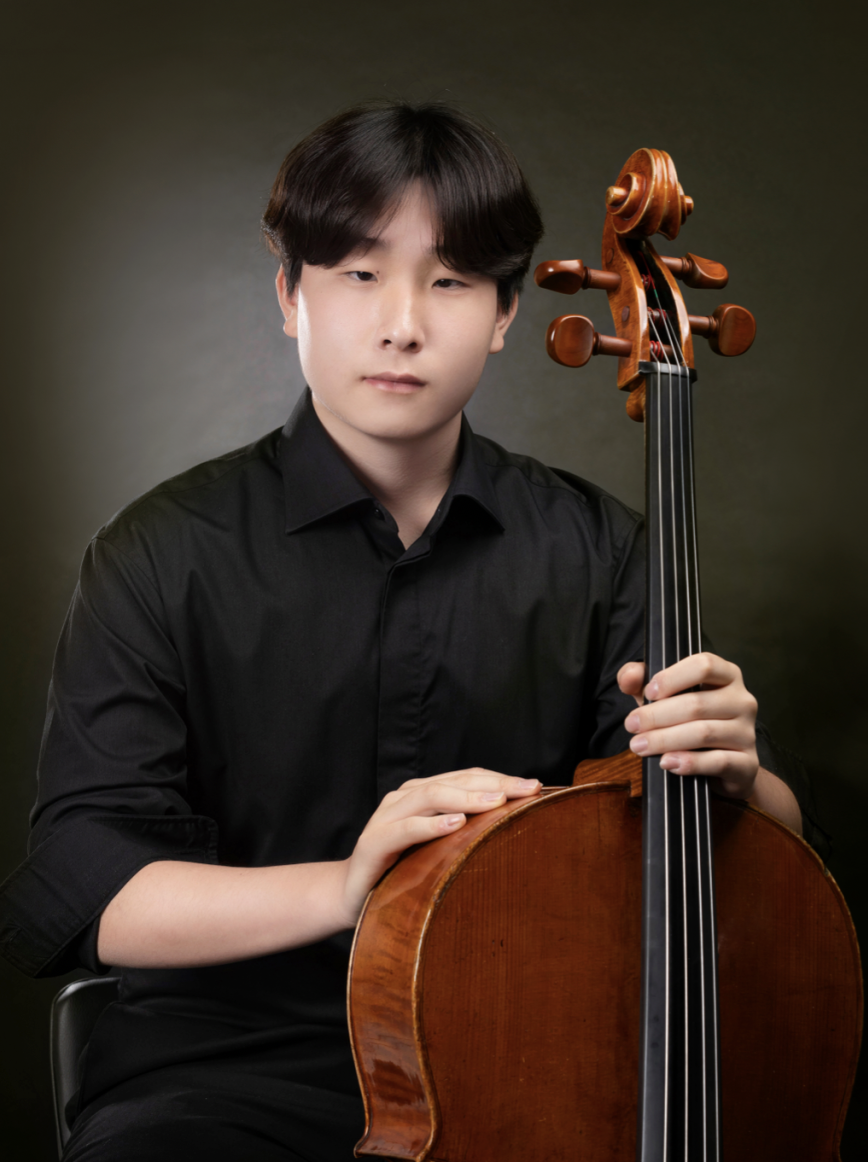
Jiho Eun
Founder & Performer · Composition & Cello
When I first started thinking seriously about environmental music, I was drawn to an obvious idea: record the sea, birds, wind or rain, then place those sounds inside a composition. Growing up around the ocean made this especially natural to me. The sound of water already seemed musical. It had rhythm, repetition, changes in intensity and long periods where almost nothing happened.
But I have become increasingly uncomfortable with one question.
If I record thirty seconds of waves, place them underneath a cello melody and call the piece environmental, have I actually engaged with nature? Or have I simply used nature as another instrument in my sample library?
I now think sampling nature becomes meaningful only when we treat environmental sound as evidence of a place, rather than decoration for a piece of music.
This idea has a history. The World Soundscape Project, established by R. Murray Schafer and colleagues at Simon Fraser University around the late 1960s and early 1970s, began by studying how people relate to their sonic environments. Its work eventually helped develop what we now call acoustic ecology and soundscape composition.¹
Composer Hildegard Westerkamp later argued that soundscape composition should communicate something about place, time, environment and the act of listening itself, rather than simply treating recorded environmental sounds as raw musical objects.²
That distinction matters.
A wave recorded at Jeju is not just "water.wav." It happened somewhere, at a particular time, under particular weather conditions. Perhaps there was a fishing boat further offshore. Perhaps wind hit the microphone. Perhaps insects or birds were audible behind the surf. The imperfections are not necessarily noise that needs to be removed. They may be the information that tells us where we actually are.
Science is beginning to make this even clearer. Ecologists now use passive acoustic monitoring, leaving recorders in forests, wetlands and oceans to study animals and ecological change. A 2025 systematic review examined 187 studies using ecoacoustics to monitor ecosystem degradation and restoration. Birds, bats, amphibians, insects and entire soundscapes can all leave detectable acoustic traces of ecological conditions.³ In other words, the sounds composers might casually call "atmosphere" can also contain real biological information.
At the same time, we should not romanticise this. Scientists have warned that a recording cannot simply be converted into a perfect biodiversity score. A large study involving more than 8,000 recordings found that commonly used acoustic measures did not reliably predict species richness across very different ecosystems, although changes in soundscapes could still reveal changes in ecological communities.⁴ Listening is powerful, but it does not automatically give us complete ecological understanding.
For a composer, I think that limitation is actually useful.
It reminds us that we are listening to something we do not fully own or understand.
There are artists who have taken this responsibility seriously. Cheryl E. Leonard's Antarctica: Music from the Ice incorporated field recordings alongside sounds produced using materials such as rocks, shells and other natural objects collected during Antarctic fieldwork. Her compositions were not simply using "icy sounds" to create atmosphere. They emerged from direct encounters with a specific environment and were used to draw attention to environmental change.⁵
David Monacchi takes the idea even further through Fragments of Extinction. Instead of collecting isolated beautiful animal calls, he has recorded extended, spatial sound portraits of primary rainforests in places including the Amazon, Africa and Borneo. His project crosses composition, bioacoustics and conservation, attempting to preserve some record of acoustic ecosystems that may be transformed or lost through deforestation and biodiversity decline.⁶
What interests me about these projects is that the recording is not merely a sample from nature. The recording becomes a reason to think about the place itself.
That is the direction I want environmental composition to take.
Through Ecomusician, I have already started thinking about ecology beyond the notes themselves. My eco conscious cello recital experimented with reduced lighting and lower impact production choices. During our ambassador retreat at Jeoji Oreum, environmental discussion happened alongside physically cleaning the landscape. We have also performed student compositions responding to environmental ideas. These experiences have gradually convinced me that environmental music becomes weaker when ecology is only represented symbolically.
If I begin incorporating more field recordings into my own compositions, I want to know what I am recording and why.
If I record the Jeju shoreline, I want to remember that it is not simply a peaceful ocean sound. It exists alongside tourism, fishing, coastal development, marine debris, changing ecosystems and the lives of people whose relationship with that sea stretches across generations. If I record an oreum, I want to notice the footsteps, aircraft, insects and human voices as well as the birds. Removing every human sound to manufacture an imaginary "pure nature" may actually make the recording less truthful.
I also think manipulation should be intentional.
Stretching a bird call until it becomes an electronic drone can be artistically fascinating. Turning waves into rhythmic material can completely transform our perception of them. I am not arguing that composers must preserve field recordings like scientific specimens. Music requires imagination.
But transformation should begin after listening, not instead of listening.
The latest thinking in ecological composition is moving in a similar direction. A 2026 study proposes that ecological music should not be defined simply by whether it contains natural sounds. What matters is how composition creates conditions that encourage listeners to perceive, explore and reconsider their relationship with sound.⁷ I find this far more convincing than the idea that adding birdsong automatically makes a piece ecological.
For me, the best environmental sample should therefore do something slightly uncomfortable.
It should remind us that the sound existed before the composer pressed record.
The bird was not singing for my composition. The waves were not providing accompaniment. The forest was not waiting to become musical material.
They already had their own rhythms, relationships and meanings.
Perhaps the role of an environmental composer is not to give nature a voice. Nature has never been silent.
Our job may simply be to create situations in which people finally choose to listen.
Sources
- 1.Simon Fraser University — World Soundscape Project founded by R. Murray Schafer and colleagues, origin of acoustic ecology and soundscape composition.
- 2.Simon Fraser University — Hildegard Westerkamp's work on soundscape composition and its relationship to place, time, and listening.
- 3.Wiley Online Library — 2025 systematic review of 187 ecoacoustic studies on ecosystem degradation and restoration.
- 4.Nature — large study of over 8,000 recordings on acoustic indices and species richness across ecosystems.
- 5.Cambridge University Press — Cheryl E. Leonard's Antarctica: Music from the Ice and field recording-based composition.
- 6.Fragments of Extinction — David Monacchi's project recording primary rainforest sound portraits across the Amazon, Africa and Borneo.
- 7.Cambridge University Press — 2026 study on ecological music and composition's role in shaping listeners' relationship with sound.
Jiho Eun
Founder & Performer · Composition & Cello
Jiho is a cellist, conductor, and student music director whose work often connects performance with the natural environment. Growing up close to the sea has shaped both his musical identity and his interest in using music to create meaningful experiences for audiences.

