The Ocean Is Not Silent
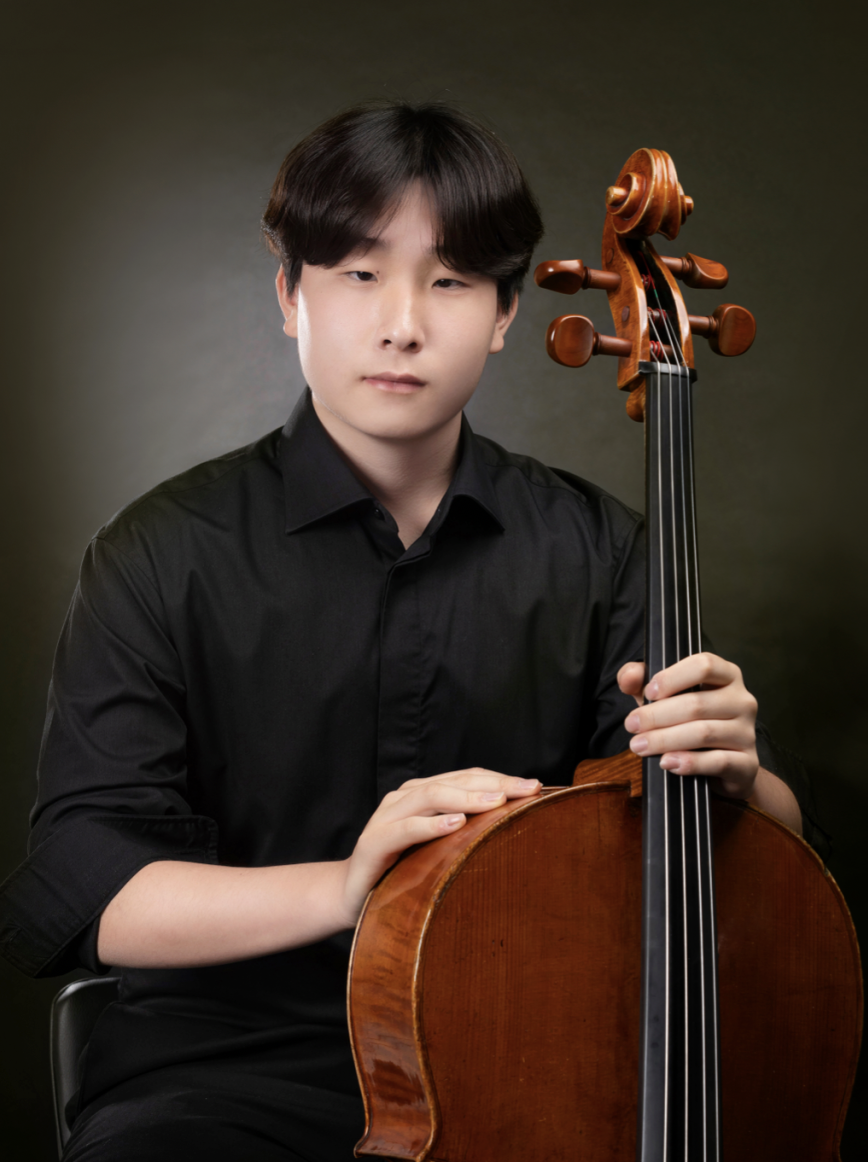
Jiho Eun
Founder & Performer · Composition & Cello
People often describe the ocean as peaceful.
I understand why. From the shore, repetitive waves can feel almost hypnotic. Composers have been fascinated by the sea for centuries because it seems to offer endless musical metaphors: movement, rhythm, depth, distance, calm and violence.
But underwater, the ocean is not a quiet blue space.
It is full of sound.
For many marine animals, sound is not decoration. It is information. NOAA explains that marine species use sound to locate prey, communicate, navigate, find mates and understand their surroundings. Because sound travels extremely effectively through water, it can function across distances that vision cannot. In some ocean layers, low frequency sound can travel hundreds or even thousands of kilometres.¹
Whales are perhaps the most familiar example. Their clicks, whistles and calls are involved in navigation and social communication. Different groups can even display distinctive vocal patterns.²
Then humans entered this acoustic world with engines.
Commercial shipping, recreational vessels, construction and energy exploration have increased underwater noise in many marine environments. NOAA notes that human generated noise can mask natural sounds and interfere with animals' ability to communicate or detect important environmental information.²
The word "mask" interests me as a musician.
Masking is already something we think about in orchestration. If several instruments occupy similar registers at high volumes, one line may disappear even though it is still physically present.
Imagine the same principle happening across an ocean.
A whale may still call. The problem is that another animal may have more difficulty hearing it through the acoustic clutter produced by us.
This has changed the way I think about environmental music.
It is easy to compose a piece inspired by whales. Add a long glissando to a cello, use harmonics, create a dark electronic drone and give the piece a title about the sea. There is nothing inherently wrong with that. It may be beautiful.
But if music is going to claim a relationship with the ocean, I think musicians should also learn something about the actual acoustic environment they are representing.
The sea is not merely an image.
It is habitat.
Sound itself is part of that habitat.
That thought creates a strange responsibility for musicians because our art is also made of sound. We normally celebrate the ability to fill a space acoustically. In marine conservation, the ethical question can be the opposite: when should humans become quieter?
I find that powerful.
Environmentalism is often framed visually. We protect forests because we can see trees disappearing. We remove plastic because we can see it floating.
Noise leaves no pile behind.
Once a ship has passed, the sound appears to vanish. Yet during the time it exists, it can alter another species' sensory world.
Perhaps one of the things musicians can contribute to environmental thinking is sensitivity to that invisible dimension.
We already know that sound matters.
The next step is remembering that humans are not the only listeners.
Sources
- 1.NOAA's National Ocean Service — marine species use of sound for communication, navigation, and prey location; low frequency sound propagation in ocean layers.
- 2.NOAA's National Ocean Service — whale vocalisation patterns and the impact of human-generated underwater noise on marine acoustic environments.
Jiho Eun
Founder & Performer · Composition & Cello
Jiho is a cellist, conductor, and student music director whose work often connects performance with the natural environment. Growing up close to the sea has shaped both his musical identity and his interest in using music to create meaningful experiences for audiences.

